Flooded Basement Cleanup in Allisonville: Real Jobs, Real Costs
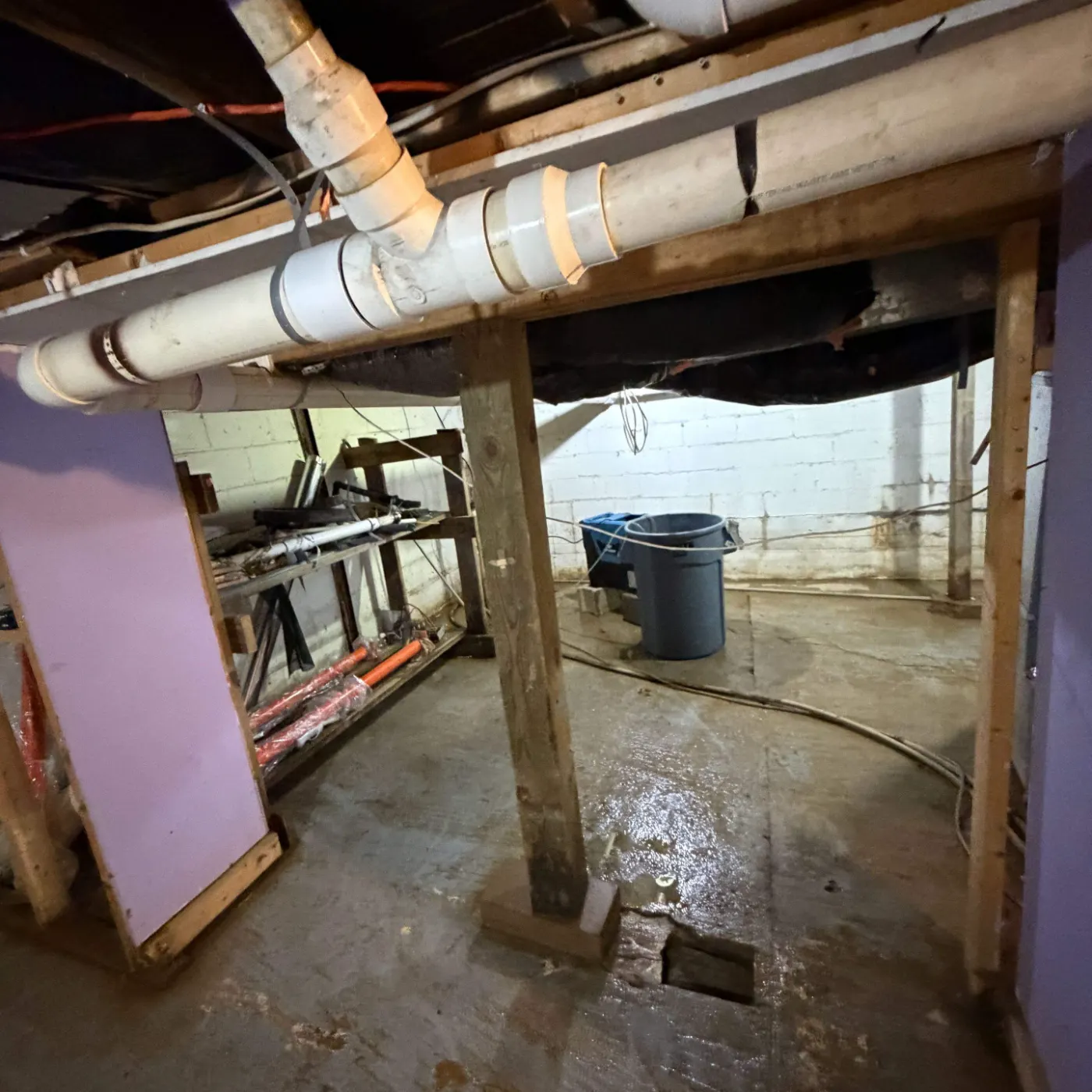
A flooded basement in Allisonville is one of those problems that gets worse the longer you stare at it. Water seeps deeper into drywall, soaks the bottom plate of your framing, lifts laminate, and starts pushing humidity into the floor above you. Within 24 to 48 hours, you are no longer dealing with a water problem. You are dealing with a mold problem layered on top of a water problem, and the cost roughly doubles.
Allisonville Water Restoration has been handling basement flooding calls across Central Indiana since 2018. We are IICRC certified, BBB A+ accredited, and we answer the phone at 2 a.m. because that is when sump pumps fail and finished basements turn into wading pools. This guide is written for the homeowner who is standing on the stairs right now, phone in hand, trying to figure out what to do, what it will cost, and who to trust. If we cannot help your specific situation, we will tell you directly and point you to someone who can.
Below are the questions Allisonville homeowners actually ask when their basement floods, answered the same way we would answer them on the phone.
What Professional Drying Actually Looks Like in a Allisonville Basement
When our crew rolls up to a flooded basement, the first thirty minutes are not about pulling out fans and walking away. They are about reading the situation. A technician walks the perimeter with a moisture meter and a thermal camera, mapping how far the water has migrated behind drywall, under the carpet pad, into the bottom plates of framing, and through any finished cabinetry. Water does not stop where you can see it. In a typical Allisonville basement with finished walls, moisture often travels 12 to 24 inches up the drywall through capillary action within the first few hours, even if the visible water line looks much lower.
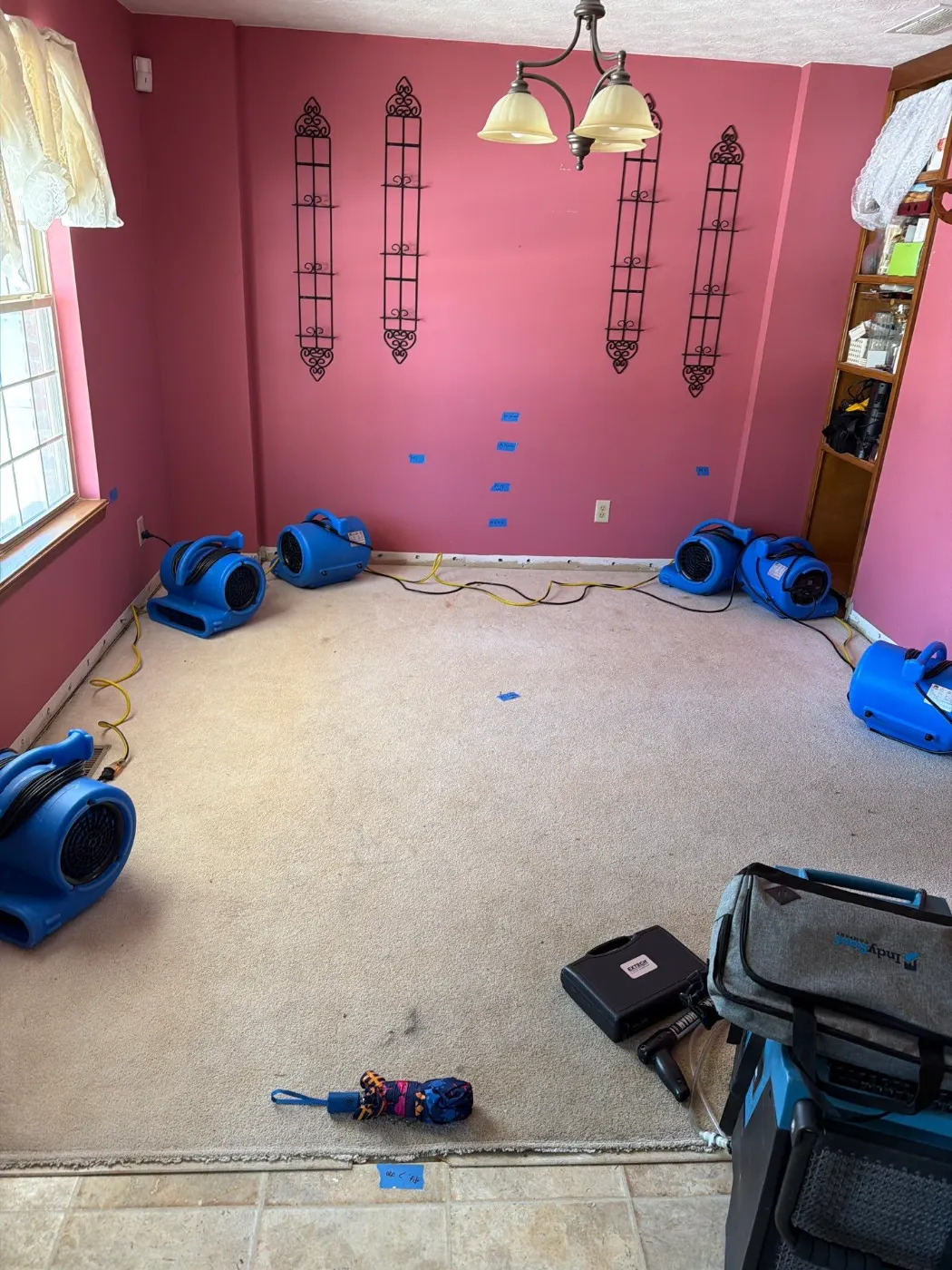
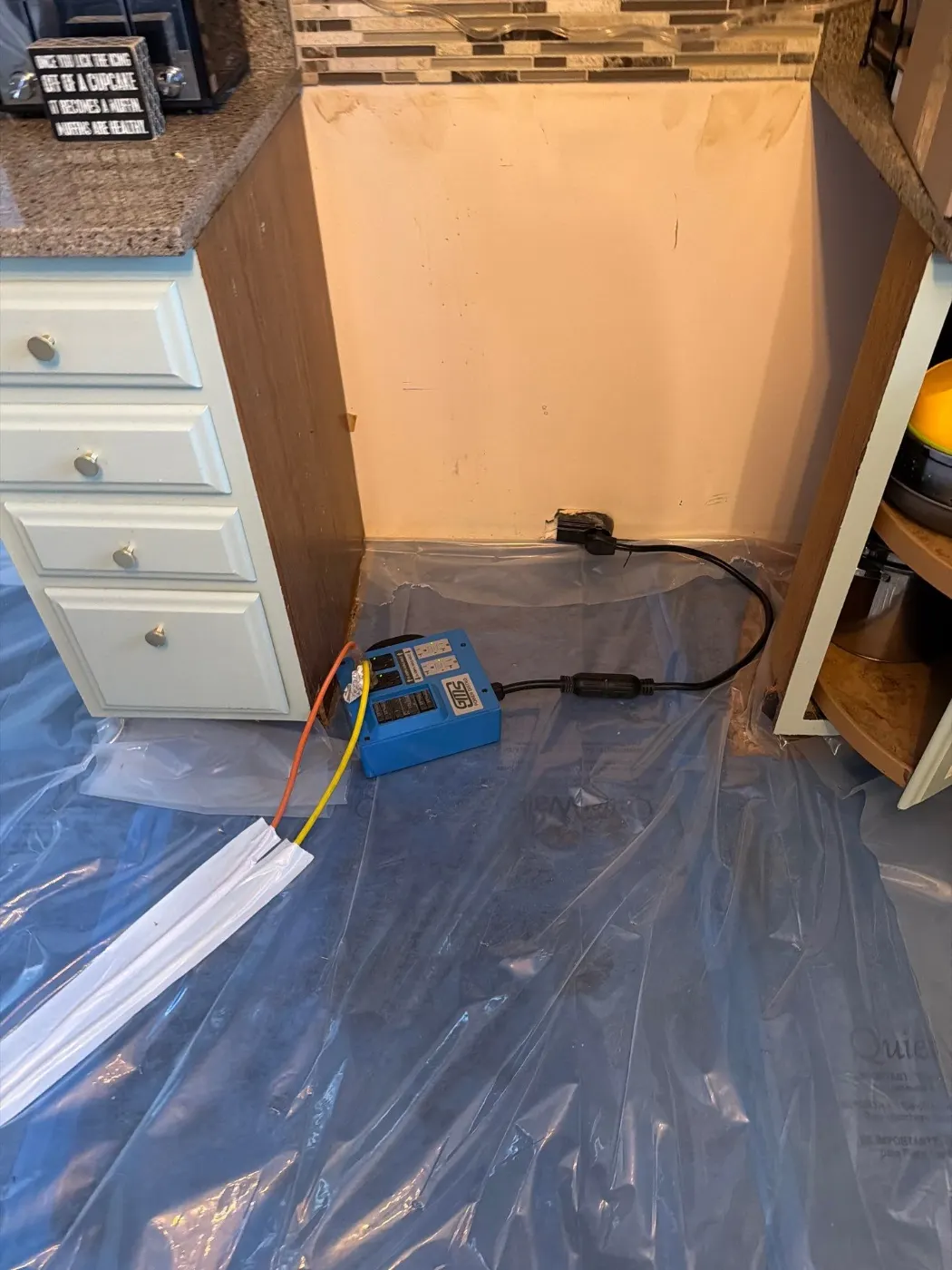
Once the assessment is done, the work happens in a clear order. Standing water comes out first, usually with truck mounted extractors that pull hundreds of gallons per hour. Saturated carpet pad gets cut and removed because it almost never dries in place without trapping moisture against the slab. Baseboards come off in affected areas, and small relief holes may go into the bottom of drywall cavities so air can move through the wall rather than around it. Then the drying equipment goes in. For an average 800 to 1,200 square foot basement, you can expect somewhere between 6 and 14 air movers along with 2 to 4 commercial dehumidifiers, depending on how saturated the materials are and what category of water you are dealing with.
The dehumidifiers we use are not the small units you find at a big box store. Commercial LGR (low grain refrigerant) and desiccant dehumidifiers can pull 15 to 30 gallons of moisture out of the air per day, which is what creates the vapor pressure differential that actually pulls water out of soaked materials. Air movers do not dry anything on their own. They simply push the boundary layer of moist air off the surface of wet materials so the dehumidifier can capture it. That is why both pieces have to work together, and why the placement and angle of each air mover gets adjusted daily based on moisture readings.
Category matters more than most homeowners realize. Clean water from a supply line is Category 1 and can often be dried in place with minimal demolition. Water that has sat for more than 48 hours, or that came from a dishwasher, washing machine, or rainwater that traveled through soil, is Category 2 and requires more aggressive removal of porous materials. Sewage backup is Category 3, and at that point you are no longer in a simple drying job. If you are dealing with that scenario, our sewage cleanup process follows different containment and disposal rules entirely, and we walk you through it before anyone starts cutting.
Stop the damage clock now
Every hour your basement sits wet, the repair cost climbs and the chance of mold rises. If water is on your floor right now, call Allisonville Water Restoration. We will give you a straight answer about what it will take, what it will cost, and whether your situation needs us or just a good shop vac and a fan. Allisonville homeowners have trusted us since 2018, and that reputation is the only thing we care about protecting more than your basement.
What to Do Tonight Before the Crew Arrives
If water is still actively coming in, your first move is to stop the source if it is safe to do so. Shut off the main water valve for supply line failures. For groundwater or storm driven flooding, do not enter the basement if the water is anywhere near outlets, the panel, or hardwired appliances. Cut power at the breaker from outside the affected area if you can do it safely, and call us. Pull what you can save from the wet zone, photograph everything for your claim, and resist the urge to throw out damaged items before an adjuster has seen them. For a full walkthrough of immediate steps, our basement flooding response page covers the exact sequence we recommend to Allisonville homeowners while they wait for a technician.
While you wait, open any basement windows if outdoor humidity is lower than indoor, move furniture legs onto small blocks or aluminum foil squares to prevent staining and wicking, and lift draperies or fabric items off the floor. Do not run the HVAC system, because pulling humid air through the ducts can spread moisture and contaminants into the rest of the house. If you have a sump pump that is still functional but overwhelmed, leave it running. Allisonville Water Restoration technicians are trained to integrate with whatever equipment is already on site rather than shutting it down.
The honest truth is that basement flooding feels catastrophic when you are standing in it, but with the right response in the first 24 hours, most basements come back to fully dry, structurally sound, and mold free. The homes that turn into nightmare projects are almost always the ones where someone rented a couple of box fans from a hardware store, declared it handled, and discovered the real damage six weeks later.
What a Flooded Basement Actually Costs
This is the question every homeowner in Allisonville wants answered before anything else, and we will give you real numbers rather than dance around them. A small, clean water basement flood with limited finished materials usually lands between $2,500 and $4,500 for full extraction, drying, and antimicrobial treatment. A mid range job involving 500 to 900 square feet of affected finished space, partial drywall removal, and carpet pad replacement typically runs $4,500 to $9,000. Larger losses with significant Category 2 or 3 contamination, structural drying of framing, and demolition of cabinetry or built ins can climb to $12,000 to $20,000 or more.
Several variables push a job toward the higher end of those ranges. Ceiling height matters, because taller basements have more air volume to dehumidify. The type of flooring matters too. Engineered hardwood and laminate almost always have to come out, while sealed concrete can usually be dried in place. Built in shelving, custom trim, and finished ceilings add labor hours quickly. If insulation in the walls got wet, that has to be removed and replaced because wet fiberglass and cellulose lose their R-value and become a mold substrate within days. Each of these factors gets itemized in the estimate so you can see exactly where the money is going.
Insurance is where things get interesting. Sudden and accidental water releases, like a burst pipe or a failed water heater, are almost always covered under a standard homeowner policy. Groundwater intrusion and sump pump failure usually are not, unless you have a specific water backup endorsement. We document every job to insurance industry standards, including moisture mapping logs, daily drying readings, and itemized scope of work using Xactimate pricing. That documentation is what gets claims approved without back and forth. If you want a deeper breakdown of how restoration invoices are built, our guide to water damage restoration cost walks through every line item.
One thing we tell every Allisonville homeowner: the cheapest quote is rarely the cheapest job. Companies that skip moisture mapping, leave equipment for too few days, or fail to address hidden saturation often create the mold remediation job that shows up four months later. A proper structural dry takes 3 to 5 days in most basements, with daily moisture readings logged to verify progress. If a company tells you they will be in and out in 24 hours, ask them how they plan to hit drying standards on framing and subfloor that took hours to absorb water.
Frequently Asked Questions
How fast can Allisonville Water Restoration get to my flooded basement in Allisonville?
For most Allisonville addresses, we dispatch a crew within 60 to 90 minutes of your call, 24 hours a day. Overnight and weekend calls get the same response time as weekdays.
Will my homeowners insurance cover a flooded basement?
It depends on the cause. Sudden internal failures like burst pipes or appliance leaks are typically covered. Groundwater seepage and sewer backups usually require specific riders. Allisonville Water Restoration documents every job to give your adjuster what they need.
How long does professional basement drying actually take?
Most Allisonville flooded basements dry in 3 to 5 days with proper equipment placement. Concrete and framing hold moisture longer than drywall, so we use meters daily rather than guessing based on appearance.
Can I save my carpet after a basement flood?
Sometimes. Category 1 clean water caught within 24 hours often allows carpet to be saved with pad replacement. Category 2 or 3 water almost always means full removal for safety reasons.
What if I am not sure my basement actually needs professional help?
Call us anyway. We do honest inspections, and if your basement does not need mitigation, we will tell you that directly rather than create work that is not necessary.
Have a restoration question?
Our IICRC certified Allisonville crew is ready to help. Free assessments, written scopes, no pressure.